- Clayton's Newsletter
- Posts
- Wednesday Wisdom
Wednesday Wisdom
What does it take to be immortal, pretty simple: perseverance
Persistence is continuing to do something despite difficulty or opposition, while perseverance is keeping up effort toward a goal despite setbacks, delay, or slow progress. These are bedrock principles and virtues of Stoic Philosophy.
The Stoics were practical philosophers of resilience, less concerned with abstract theory and more with how to live well in a chaotic, unpredictable world. Founded in ancient Greece by Zeno of Citium, and later refined in Rome by thinkers like Seneca, Epictetus, and Marcus Aurelius. Stoicism teaches a simple but demanding idea, “you don’t control what happens to you, only how you respond.” Greek writer Homer details how Odysseus spends ten years trying to get home after fighting a ten-year war. He survives shipwrecks, the loss of his entire crew, and the direct wrath of the god, Poseidon. Yet he persists. Roman statesman Marcus Aurelius in his personal journal Meditations, writes about the "Inner Citadel." He viewed perseverance not just as "getting through it," but as an active process of turning obstacles into fuel. He writes “The impediment to action advances action. What stands in the way becomes the way.”
Three stories to make you believe perseverance is the ultimate virtue
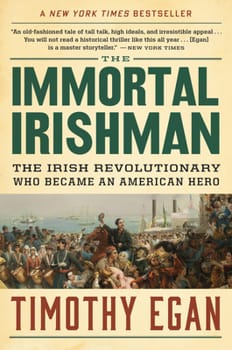
The Immortal Irishman tells the remarkable life of Thomas Francis Meagher, an Irish rebel who became an American hero. Born into privilege in Ireland, Meagher defied his background to join the Young Ireland movement and fight for independence from British rule. After being exiled to a penal colony in Tasmania, he escaped and made his way to the United States, reinventing himself in a new world. Marrying into a prominent New York family, he became a powerful orator and political figure. He led the famed Irish Brigade as its General during the American Civil War. Meagher’s courage in battle was matched by his commitment to the Irish immigrant cause, even as he faced criticism and setbacks. Through it all, the book portrays Meagher as a symbol of resilience, reinvention, and the enduring fight for freedom. Moving to the Montanna Territory as Acting Governor, he tried to bring order to a rough, rapidly growing frontier marked by lawlessness and political tension. His time in Montana was turbulent and controversial, and it ended mysteriously when he fell from a steamboat into the Missouri River and died under unclear circumstances in 1867.

In 1883, Howard Blackburn was a young fisherman working off the coast of Newfoundland when a sudden storm separated him and a fellow sailor from their schooner. Stranded in a small open dory with almost no food or fresh water, the two men drifted helplessly in freezing conditions. After days of exposure, Blackburn’s companion died, leaving him alone in the vast, icy ocean. Refusing to give in, Blackburn lashed his dead shipmate to the boat to keep balance and began an unimaginable fight for survival. With his hands frozen solid and nearly useless, he managed to rig the sail and steer using his arms and teeth, enduring nearly two weeks at sea. When he was finally rescued near Labrador, he was barely alive, his hands and feet so badly frostbitten that all his fingers had to be amputated. Lone Voyager: The Extraordinary Adventures of Howard Blackburn tell the many tales of the native Gloucester Man. Blackburn didn’t retreat from life, he rebuilt it. He learned to use what little was left of his hands an adapted to daily tasks, and eventually became a successful businessman, opening the famous Blackburn’s Tavern in Gloucester. Prohibition in 1929 essentially meant and end to his saloon business. He even returned to the sea making several solo trans-Atlantic sailing trips with special rigging and lines to help with disables., Blackburn proved that resilience is not just survival, but the refusal to be defined by loss.
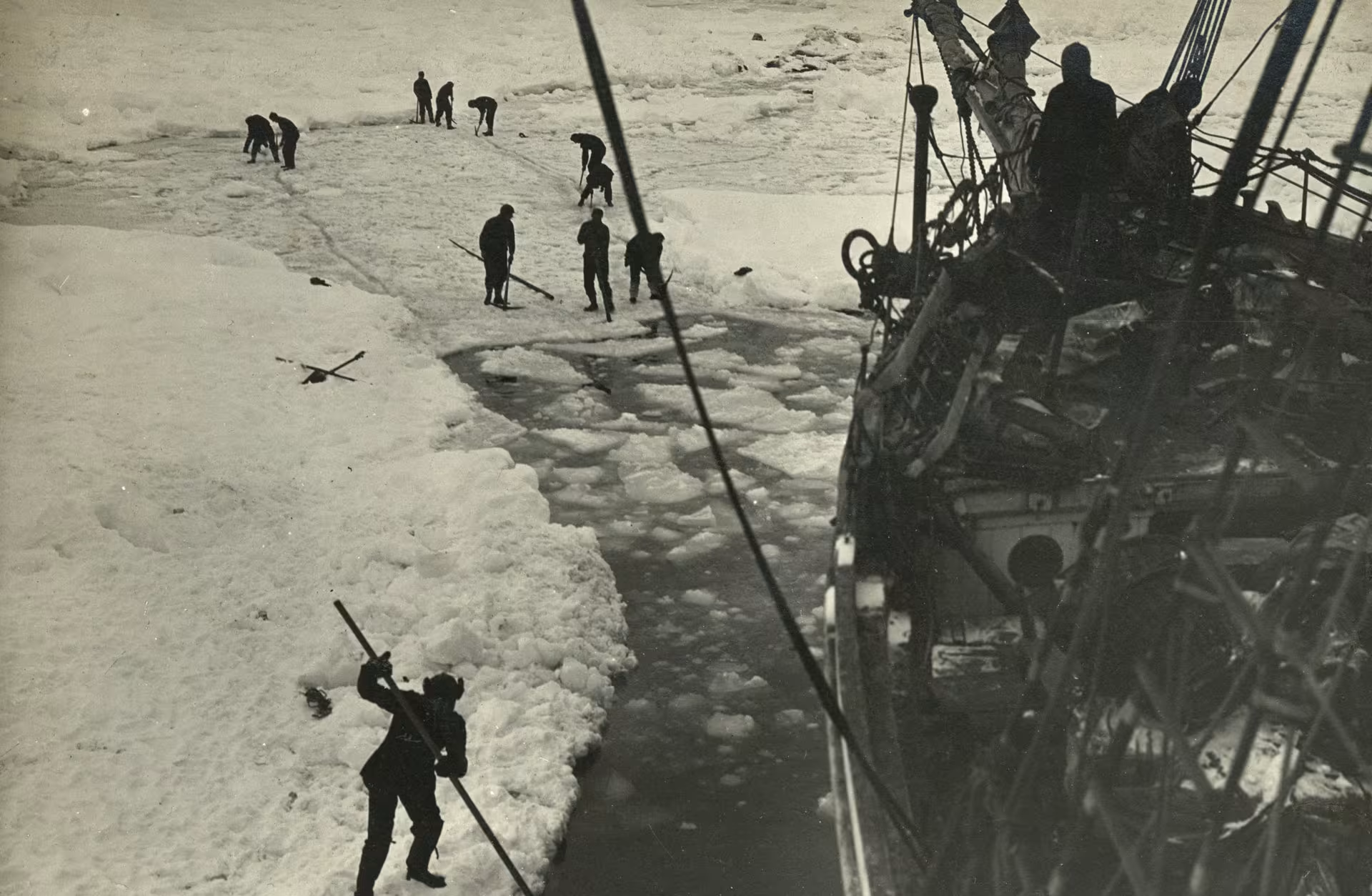
Ernest Shackleton was one of history’s greatest leaders under pressure, best known for his ill-fated but heroic Antarctic expedition. In 1914, he set out to cross the continent, but his ship, the Endurance, became trapped and ultimately crushed by pack ice in the Weddell Sea. Stranded in one of the harshest environments on Earth, Shackleton kept his crew alive through discipline, optimism, and relentless resolve. After months on drifting ice, he led a small team on an 800-mile journey in a lifeboat across the Southern Ocean to reach South Georgia Island. He then crossed the island’s unmapped mountains to secure a rescue for the men left behind. Remarkably, every member of the expedition survived, a testament to his leadership and refusal to surrender to seemingly incalculable odds. Shackleton’s story remains one of perseverance, courage, and the power of steady leadership in the face of overwhelming odds.
Persistence and perseverance…….
And now you know...
Philosophy is the art of thinking, the building block of progress that shapes critical thinking across economics, ethics, religion, and science.
METAPHYSICS: Literally, the term metaphysics means ‘beyond the physical.’ Typically, this is the branch that most people think of when they picture philosophy. In metaphysics, the goal is to answer the what and how questions in life. Who are we, and what are time and space?
LOGIC: The study of reasoning. Much like metaphysics, understanding logic helps to understand and appreciate how we perceive the rest of our world. More than that, it provides a foundation for which to build and interpret arguments and analyses.
ETHICS: The study of morality, right and wrong, good and evil. Ethics tackles difficult conversations by adding weight to actions and decisions. Politics takes ethics to a larger scale, applying it to a group (or groups) of people. Political philosophers study political governments, laws, justice, authority, rights, liberty, ethics, and much more.
AESTHETICS: What is beautiful? Philosophers try to understand, qualify, and quantify what makes art what it is. Aesthetics also takes a deeper look at the artwork itself, trying to understand the meaning behind it, both art as a whole and art on an individual level. A question an aesthetics philosopher would seek to address is whether or not beauty truly is in the eye of the beholder.
EPISTEMOLOGY: This is the study and understanding of knowledge. The main question is how do we know? We can question the limitations of logic, how comprehension works, and the ability (or perception) to be certain.