- Clayton's Newsletter
- Posts
- Wednesday Wisdom
Wednesday Wisdom
“He who learns but does not think is lost! He who thinks but does not learn is in great danger.” 「學而不思則罔,思而不學則殆。」 (Zǐ yuē: "Xué ér bù sī zé wǎng, sī ér bù xué zé dài." Confucious from
A President of a college, a Dominican priest and an Eastern Philosophy scholar walks into a bar. Sounds like the start of a great joke. In reality, it was first semester of my junior year, and these three people were actually one man.
After two years of studying western civilization, five days a week that included team teaching of scholars from history, religion, arts, literature and philosophy, it only seemed logical to study some eastern philosophy. Ironically, Civ, as it’s known colloquially at a small college in Rhode Island, starts with the civilizations of the Tigris and Euphrates River, the fertile crescent of Mesopotamia and the Yellow and Yangtze River Valleys in China. These “cradles of civilization” certainly point more east than west as the map is laid across a fine oak table.
Finding a starting point is never a fluid or complete proposition, but it follows the path on how people became less nomadic and settled down into communities around agriculture. It also demonstrates the ability of a society to exchange ideas and stories, to learn and prosper. The starting point helps transition into ancient Egypt, The Greeks and the Hellenistic society around the Mediterranean, continuing through medieval times, the renaissance and the enlightenment. Certainly not a complete story, largely brushing over civilizations in the Americas and Africa, but teaching and telling a story has some limits of time and space that can best addressed by advanced degrees and specialized books. The point of the class is an epistemological exercise; how we got here, why do we have these values, why have we decided how to govern and what are our social norms?
I asked several classmates on what they remembered from the Eastern Philosophy course. One comment resonated, “it was more like eastern religion than eastern philosophy”. While western philosophy looks to explore logic, reason and science, eastern philosophy tends towards intuition, experience and practice. While the west seeks to answer what is true? and how do we know? the east seeks to answer how do we live? how do we end suffering? Many Eastern systems are non-theistic which differs from the west, which in turn makes my classmate quite intuitive in understanding that eastern philosophy and religion are intertwined.
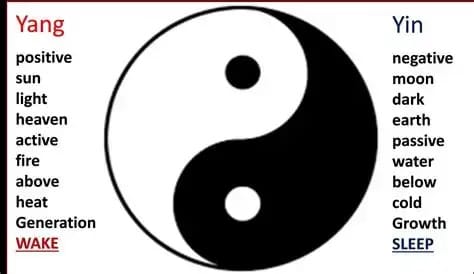
Taoism, or Daoism, is centered on the Dao (the Way), an eternal force that represents the natural order of the universe and the source of all existence. It emphasizes the principle of Wu Wei (effortless action), which encourages individuals to act in harmony with nature rather than forcing their will against the flow of life. The philosophy highlights the balance of Yin and Yang, teaching that all seemingly opposing forces in the world are interconnected and must remain in equilibrium to achieve harmony. The goal of a Taoist is to live a life of simplicity and spontaneity, shedding artificial social constraints to return to a state of natural virtue and inner peace. Confucianism is an ancient Chinese ethical system that focuses on social harmony, filial piety (family love), and the cultivation of personal virtue through strict adherence to rituals and hierarchical relationships. It is based on the Chinese philosopher Confucius who believed that social harmony starts with the individual and the family. If the individual is virtuous, the family will be stable; if the family is stable, the nation will be at peace.
Eastern philosophy certainly seemed like a great choice, a foil to western civ teaching and a way of looking at civilization and its growth from a different perspective. Father Peterson didn’t disappoint and more importantly he taught a valuable lesson outside of his teaching of Confucious or Taoism; dogma and faith are not in conflict with other religious ideas any more than science and religion should be in conflict. Ancient knowledge and wisdom are not some historical artifacts, but the building blocks of progress, peace, love and understanding.
And now you know...
Thank you and the shout out to JC and the pocket bear for your insight 😁
Thank you, Dad, for the gift of curiosity
Philosophy is the art of thinking, the building block of progress that shapes critical thinking across economics, ethics, religion, and science.
METAPHYSICS: Literally, the term metaphysics means ‘beyond the physical.’ Typically, this is the branch that most people think of when they picture philosophy. In metaphysics, the goal is to answer the what and how questions in life. Who are we, and what are time and space?
LOGIC: The study of reasoning. Much like metaphysics, understanding logic helps to understand and appreciate how we perceive the rest of our world. More than that, it provides a foundation for which to build and interpret arguments and analyses.
ETHICS: The study of morality, right and wrong, good and evil. Ethics tackles difficult conversations by adding weight to actions and decisions. Politics takes ethics to a larger scale, applying it to a group (or groups) of people. Political philosophers study political governments, laws, justice, authority, rights, liberty, ethics, and much more.
AESTHETICS: What is beautiful? Philosophers try to understand, qualify, and quantify what makes art what it is. Aesthetics also takes a deeper look at the artwork itself, trying to understand the meaning behind it, both art as a whole and art on an individual level. A question an aesthetics philosopher would seek to address is whether or not beauty truly is in the eye of the beholder.
EPISTEMOLOGY: This is the study and understanding of knowledge. The main question is how do we know? We can question the limitations of logic, how comprehension works, and the ability (or perception) to be certain.